Seasonal & Lay-Up · 6 min read
Seasonal Lay-Up Coverage Explained: How Pontoon Owners Save Money in the Off-Season
If your pontoon spends more of the year in storage than in the water, this is the coverage decision that has the biggest impact on your annual premium.
July 28, 2026
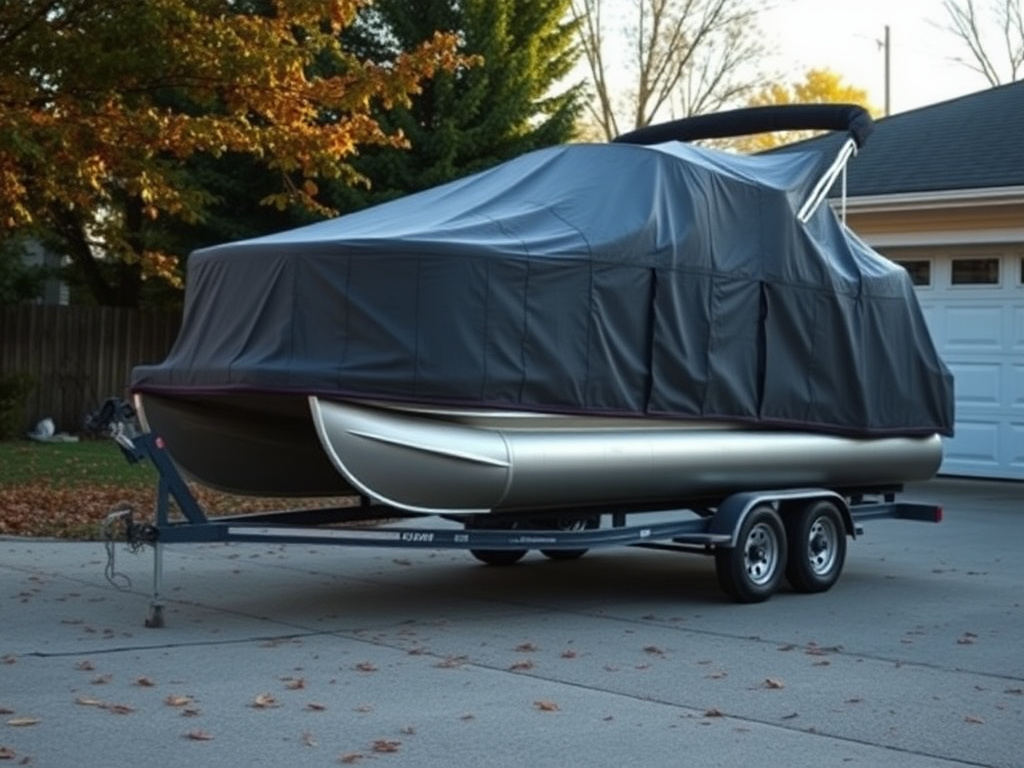
If you own a pontoon in a northern or midwest lake market, there's a good chance your boat spends more of the calendar year winterized and stored than it does actually on the water. Seasonal lay-up coverage exists specifically for that pattern, and it's the single biggest lever most pontoon owners have to control their annual premium — yet a surprising number of owners have never had it explained to them clearly. Here's exactly how it works.
What lay-up coverage actually does
You set two dates on your policy: an in-season start date, when you'll actually be operating the boat, and a lay-up date, when the boat is winterized and put into storage. During the in-season window, your policy runs at full coverage — liability, physical damage, towing, everything. During lay-up, the operational liability and towing-sport portions of your coverage step down or pause, because you simply aren't generating that exposure while the boat is shrink-wrapped in a storage yard. Physical damage protection — fire, theft, vandalism, weather — stays in force the entire time, because those risks to a stored boat don't disappear just because it isn't in the water.
Why this matters more than owners expect
Liability premium is priced around operational exposure — the risk that you'll cause injury or damage while actually running the boat. If your pontoon realistically sees 5 months of water time and 7 months in storage, a policy without lay-up coverage is charging you close to full liability premium for those 7 months you aren't creating any liability exposure at all. Lay-up coverage corrects for that mismatch directly.
The math is simple: no operation, no operational liability exposure, lower operational liability premium — while your boat's actual value stays protected the whole time it's stored.
Setting your dates correctly
This is where the real value comes from, and where it's easy to get wrong in either direction. Set your in-season window too wide — say, April through November on a lake that realistically freezes by mid-October — and you're paying for operational coverage on weeks you'll never actually use. Set it too narrow, and you risk a genuine coverage gap if you launch the boat even a few days outside your stated dates. The right approach is matching your dates to how you actually use your specific lake, not a generic regional calendar, and adjusting them year to year if your season shifts.
What stays covered, and what doesn't, during lay-up
- Stays covered: fire, lightning, theft, vandalism, and weather/storm damage while the boat is stored.
- Stays covered: the boat whether it's shrink-wrapped in a yard, in an indoor/heated facility, or on a trailer.
- Steps down: on-water operational liability for the lay-up period.
- Steps down: towing-sport liability, since you're not towing anything while the boat is stored.
Lay-up coverage vs. simply canceling your policy
Some owners assume the simplest way to save money in the off-season is to cancel the policy entirely and rewrite a new one each spring. This is almost always a worse approach than lay-up coverage for two reasons. First, canceling creates a real gap in fire/theft/weather protection during exactly the season when a stored, unattended boat is most exposed — a falling tree limb, a storage-yard fire, or theft from an unmonitored lot doesn't check whether your policy happens to be active. Second, a lapse in coverage can affect your pricing and underwriting at your next renewal, since continuous coverage is generally viewed favorably. Lay-up coverage delivers the real premium savings of reduced operational exposure without creating either problem.
If you need to launch outside your lay-up dates
An unusually warm early spring, a one-off fall outing, or a change in plans can mean wanting to launch the boat outside your stated in-season window. If that happens, call before you launch — dates can typically be adjusted with a quick call, which is a far better outcome than discovering a gap after something happens on an unplanned outing.
Getting your lay-up dates right
Tell us honestly how you actually use your boat — when you typically launch, when you typically winterize, and where it's stored during the off-season. We'll set dates that match reality and show you the actual dollar difference lay-up coverage makes on your specific policy. For most seasonal owners, it's the single highest-value conversation to have before your next renewal.
Quick Answers
Related Questions
Does lay-up coverage mean my pontoon has no coverage while stored?
+
No — fire, theft, vandalism, and weather protection stay in force the entire time the boat is stored. What steps down is the operational liability and towing coverage you don't need while the boat isn't in the water.
Can I adjust my lay-up dates if my season changes?
+
Yes, dates can be adjusted year to year, and if you need to launch outside your stated window for a one-off trip, call first so we can adjust coverage rather than risk a gap.
Keep Reading
More Guides


Get pontoon coverage built around how you boat
Tell us about your boat and your lake and we'll come back with a coverage combination priced to your real usage — not a flattened generic boat quote.