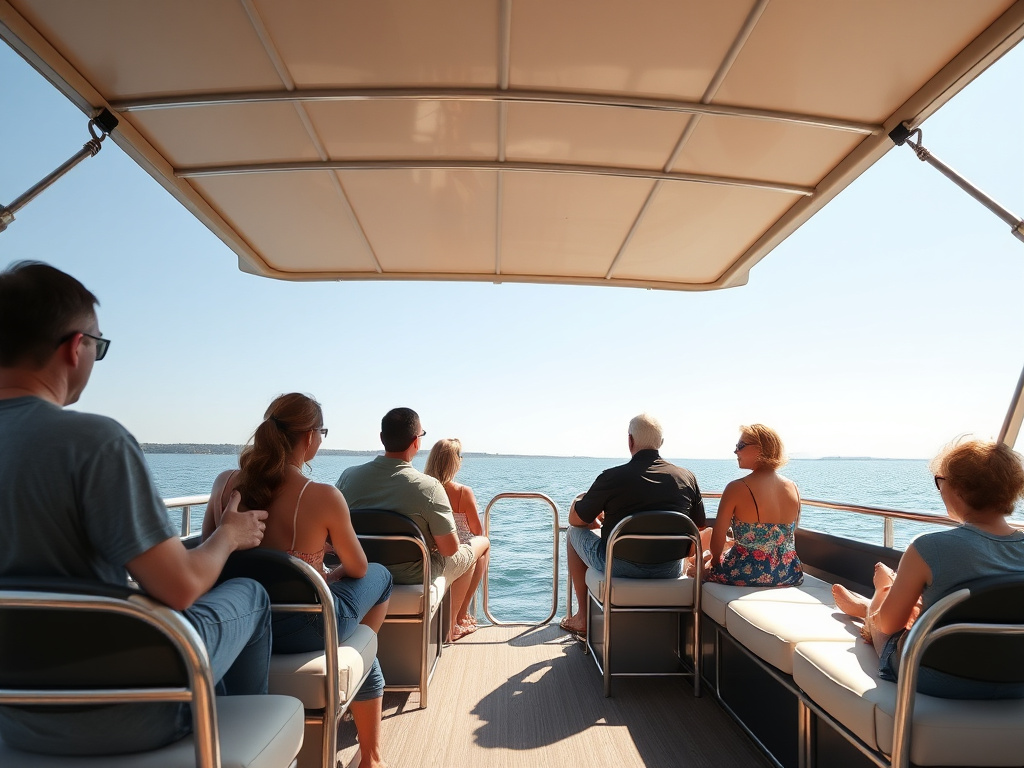
Your Passengers
Guest & Passenger Liability Coverage
Protects you if a guest, passenger, or someone in the water near your boat is injured — a top concern given how many people a typical pontoon carries.
A pontoon's whole appeal is capacity — a 24-foot tri-toon can legally carry 12-14 people, and it's routine for a weekend outing to fill every seat with family, friends, and their kids. That same capacity is exactly why guest and passenger liability deserves specific attention: more people aboard means more exposure if someone is injured boarding, moving around the deck, swimming from the boat, or being towed behind it.
Guest and passenger liability sits alongside your general liability coverage but focuses specifically on the people you're actually responsible for having aboard — passengers, not just other boaters or property you might strike on the water.
What's covered
- ✓Injury to a passenger while boarding, disembarking, or moving around the deck
- ✓Injury to a guest swimming from the boat or in the water nearby
- ✓Injury while being towed on a tube, skis, or a wakeboard behind the boat
- ✓Medical payments coverage for guest injuries, regardless of fault (where added)
- ✓Legal defense costs if a guest or their family brings a claim
- ✓Coverage whether the guest is a friend, family member, or a paying passenger (charter/rental use requires specific disclosure)
Who needs this
- ✓Every pontoon owner who regularly carries guests beyond immediate family
- ✓Owners who host large groups or frequent gatherings on the boat
- ✓Owners who tow tubes, skis, or wakeboards for guests
- ✓Anyone who lets friends or extended family operate the boat with guests aboard
- ✓Rental, charter, or party-pontoon operators (requires commercial/charter disclosure — see below)
Why passenger capacity changes the risk math
Liability exposure scales with how many people are realistically exposed to injury on a given outing, and a fully loaded pontoon simply has more people aboard, more people entering and exiting the water, and more towing-sport activity happening around it than most other recreational boats of similar size and price. Slip-and-fall on a wet deck, a guest injured stepping off the boat onto a dock or swim platform, or an injury during tubing or skiing are the realistic claim patterns this coverage addresses.
- More seats filled means more realistic injury exposure per outing
- Deck, boarding, and swim-platform injuries are common pontoon claim patterns
- Towing-sport injuries (tubing, skiing, wakeboarding) are a distinct exposure
Medical payments coverage — why it matters even when you're not at fault
Medical payments coverage, when added to your policy, pays a guest's medical costs after an on-board or towing-related injury regardless of who was at fault — no lawsuit, no liability determination required. For a boat that regularly carries friends and extended family, this is often the coverage that actually gets used: a guest twists an ankle boarding, or takes a hard fall while tubing, and medical payments coverage takes care of it directly and quickly, preserving the relationship instead of forcing a liability claim over a minor injury.
Rental, charter, and party-pontoon use — a different risk category
If you rent out your pontoon, run a charter operation, or regularly host paying guests, that's a materially different liability exposure than private family and friend use, and it needs to be disclosed and underwritten as such — a personal-use policy typically will not respond correctly to a claim arising from commercial or rental use. If any part of your pontoon use involves paying passengers, tell us upfront so your policy is structured correctly rather than discovering a coverage gap after a claim.
What Drives The Cost
What Affects Guest & Passenger Liability Pricing
| Typical passenger load | Boats regularly carrying larger groups reflect higher realistic exposure. |
|---|---|
| Towing watersports frequency | Regular tubing, skiing, or wakeboarding for guests raises exposure. |
| Medical payments limit selected | Higher no-fault medical limits add modest premium for meaningfully faster claim resolution. |
| Personal vs. rental/charter use | Commercial or rental use requires different underwriting and is priced differently. |
| Selected liability limit | Guest/passenger claims draw from your overall liability limit — higher limits add more cushion. |
Common Questions
Guest & Passenger Liability FAQ
Is a guest automatically covered if they're hurt on my pontoon?
+
Injuries to guests are addressed under your liability coverage (if you're found responsible) and, where added, medical payments coverage (which pays regardless of fault). We'll make sure both are sized to how many people you actually carry.
What is medical payments coverage and do I need it?
+
It pays a guest's medical costs after an on-board or towing injury without requiring a fault determination or lawsuit — for a pontoon that regularly carries friends and family, it's often the coverage that resolves a minor injury quickly and keeps the relationship intact.
Does this coverage apply if a guest is injured tubing behind my boat?
+
Yes — injury to someone being towed on a tube, skis, or a wakeboard is a core part of guest/passenger liability exposure, and one of the more common real-world claim patterns for pontoon owners who tow watersports.
I occasionally rent my pontoon out — does my personal policy cover that?
+
Not automatically, and this is important to get right. Rental and charter use is a different risk category than private guest use and needs to be disclosed and underwritten specifically — tell us upfront if any part of your use involves paying passengers.
Related Coverage
You Might Also Need
Liability Coverage
The foundation of every pontoon policy — bodily injury and property damage liability arising from operating your boat.
Learn more →Towing & On-Water Assistance
Pays for a tow back to the dock, jump-starts, and fuel delivery when your pontoon breaks down on the water — separate from roadside towing.
Learn more →Pontoon vs. General Boat Insurance
A flat-bottom, low-freeboard, low-speed, high-capacity pontoon is underwritten differently than a runabout, bass boat, or offshore vessel — here's exactly how and why.
Learn more →Get pontoon coverage built around how you boat
Tell us about your boat and your lake and we'll come back with a coverage combination priced to your real usage — not a flattened generic boat quote.