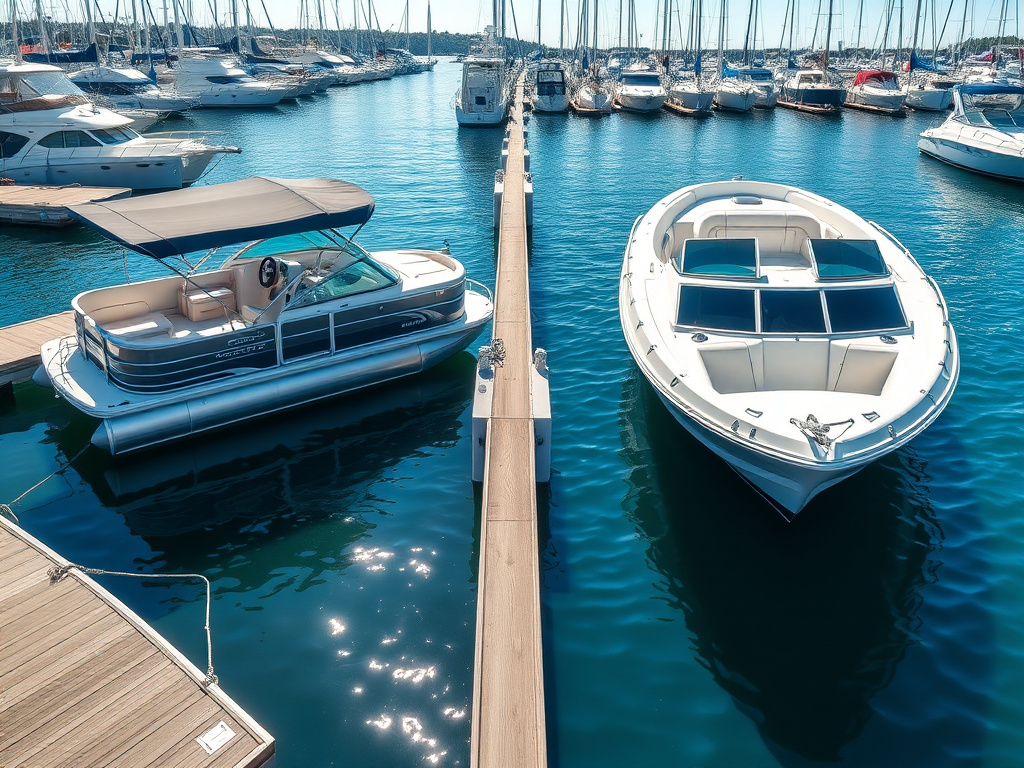
Why Pontoon-Specific
How Pontoon Insurance Differs from General Boat & Marine Insurance
A flat-bottom, low-freeboard, low-speed, high-capacity pontoon is underwritten differently than a runabout, bass boat, or offshore vessel — here's exactly how and why.
"Boat insurance" is often sold and marketed as one generic category, but a pontoon is a genuinely different vessel than a runabout, a bass boat, or an offshore center console — different hull design, different speed profile, different passenger capacity, and a different typical use pattern. A carrier or agent who treats every boat the same is either overpricing your pontoon for risks it doesn't really carry, or underpricing coverage in ways that leave real gaps.
This page walks through exactly where pontoon insurance diverges from generic boat/marine coverage, so you understand what you're actually buying and why it's structured the way it is.
What's covered
- ✓Multi-hull (tube) construction rated differently than a single-hull runabout
- ✓Higher typical passenger capacity reflected in liability underwriting
- ✓Lower top-speed profile generally favoring pontoon liability rates
- ✓Seasonal lay-up structured around typical pontoon use patterns
- ✓Deck, furniture, and canopy exposure unique to an open-deck layout
- ✓Inland-lake-first navigational limits matching how most pontoons are actually used
Who needs this
- ✓Any pontoon owner currently insured under a generic 'boat insurance' policy
- ✓New pontoon buyers comparing quotes from a general marine insurer
- ✓Owners who've been told their pontoon 'is basically the same as any other boat'
- ✓Owners switching from a runabout or fishing boat to a pontoon for the first time
- ✓Anyone unsure whether their current policy actually reflects pontoon-specific risk
Hull design: tubes vs. a single hull
A pontoon floats on two or three aluminum (or composite) tubes rather than a single fiberglass or aluminum hull. This changes both the physical-damage repair category (tube punctures and dents are a distinct, sometimes expensive repair line) and the boat's fundamental stability and capsize profile compared to a deep-V runabout. Underwriters price and structure physical damage coverage with this multi-tube construction specifically in mind, rather than applying a single-hull damage model to a boat that doesn't have one.
Passenger capacity and liability profile
A mid-size tri-toon can legally carry more passengers than most runabouts, bass boats, or center consoles of comparable length, simply because of the open, wide-beam deck layout. That higher typical passenger load is exactly why guest/passenger liability gets specific treatment on a pontoon policy rather than being an afterthought — the realistic on-board injury exposure per outing is genuinely different from a 4-person bass boat.
At the same time, most pontoons run lower top speeds than performance runabouts or offshore boats, which is a rating factor that can work in the pontoon owner's favor on the liability side — lower speed generally correlates with lower-severity collision outcomes, all else equal.
- Higher typical passenger capacity than comparable-length runabouts
- Lower top-speed profile than performance boats
- Both factors are priced specifically into pontoon liability underwriting
Use pattern: seasonal, inland, family-oriented
Generic boat/marine insurance is often built around a broader range of use cases — offshore fishing, performance boating, live-aboard cruising — that simply don't apply to how most pontoons are actually used. Pontoon insurance built specifically for the category assumes what's actually true for most owners: seasonal use tied to a lake's boating season (hence lay-up coverage being central rather than an afterthought), inland or single-lake navigational patterns (hence lake-type coverage being its own dedicated structure), and family/guest-heavy outings (hence guest liability getting focused treatment). A generic marine policy can technically cover a pontoon, but it's rarely structured around these realities the way a pontoon-specific policy is.
The bottom line
None of this means pontoon insurance is automatically cheaper or automatically more expensive than generic boat coverage — it means the coverage is structured around what actually happens with a pontoon, rather than a one-size-fits-all boat template. That shows up in how lay-up, navigational limits, guest liability, and physical damage are all built specifically around pontoon use, not bolted on as afterthoughts to a generic marine policy.
What Drives The Cost
What Affects Pontoon vs. General Boat Insurance Pricing
| Hull/tube construction | Multi-tube pontoon construction is rated differently than a single-hull boat. |
|---|---|
| Passenger capacity | Higher typical capacity is reflected specifically in liability rating. |
| Top speed profile | Lower typical pontoon speeds can favor liability pricing relative to performance boats. |
| Use pattern | Seasonal, inland, family-oriented use is priced differently than offshore or performance use. |
Common Questions
Pontoon vs. General Boat Insurance FAQ
Is pontoon insurance cheaper than regular boat insurance?
+
Not automatically — it depends on your specific boat and use. What's different is that pontoon-specific coverage is structured around how pontoons are actually used (seasonal, inland, passenger-heavy), rather than applying a generic boat template that may not fit your real risk.
Can I just insure my pontoon under a generic boat insurance policy?
+
You can, but it may not be structured around pontoon-specific realities like lay-up coverage, tube/hull repair categories, or higher typical passenger liability — worth comparing against a pontoon-specific quote to see what you might be missing or overpaying for.
Why does passenger capacity matter so much for pontoon insurance?
+
Pontoons routinely carry more people than comparable-length runabouts or fishing boats because of their open, wide-beam deck layout. That higher typical passenger load is a real factor in liability underwriting, which is why guest/passenger liability gets dedicated attention on a pontoon policy.
Do tubes really need different coverage than a regular boat hull?
+
The tubes are the pontoon's flotation and structural hull in one, and a puncture or dent from a grounding or collision is a distinct repair category from single-hull damage — physical damage coverage on a pontoon policy is written with that construction specifically in mind.
Related Coverage
You Might Also Need
Liability Coverage
The foundation of every pontoon policy — bodily injury and property damage liability arising from operating your boat.
Learn more →Physical Damage Coverage
Repairs or replaces your pontoon after collision, weather, fire, theft, or vandalism — agreed value or actual cash value, your choice.
Learn more →Guest & Passenger Liability
Protects you if a guest, passenger, or someone in the water near your boat is injured — a top concern given how many people a typical pontoon carries.
Learn more →Get pontoon coverage built around how you boat
Tell us about your boat and your lake and we'll come back with a coverage combination priced to your real usage — not a flattened generic boat quote.