Core Coverage
Pontoon & Deck Boat Liability Insurance
The foundation of every pontoon policy — bodily injury and property damage liability arising from operating your boat.
Liability coverage is the single most important piece of a pontoon insurance policy, and the one nearly every marina, lake association, and lender will ask to see proof of before you launch. It protects you financially if your pontoon causes bodily injury to someone else or damages someone else's property while you're operating it — a collision with another boat, striking a dock, or an accident that injures a swimmer or another boater.
Because a pontoon is often the boat a family fills to capacity — kids, guests, tubers, swimmers — the liability exposure on a loaded pontoon on a busy summer lake is real and immediate. Liability coverage is what stands between an on-water accident and your personal assets.
What's covered
- ✓Bodily injury to other boaters, swimmers, or passengers on other vessels
- ✓Property damage to another boat, a dock, a lift, or other lake property
- ✓Legal defense costs if you're sued following an on-water accident
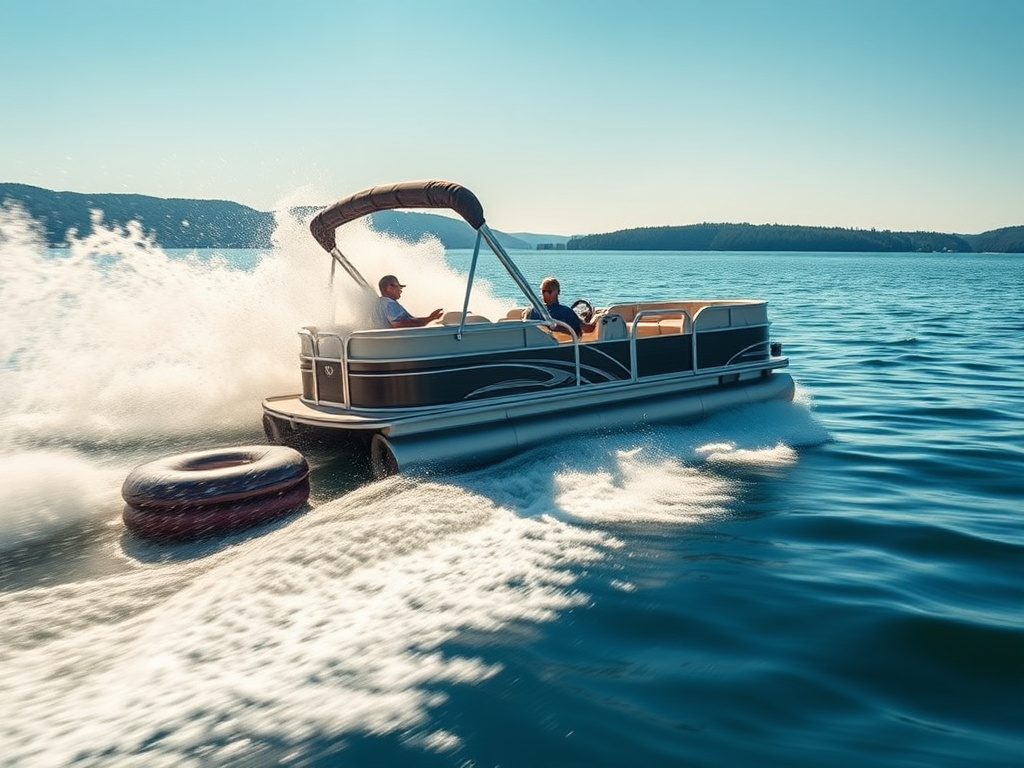
- ✓Liability while towing tubes, skiers, or wakeboarders behind the pontoon
- ✓Liability arising from a family member or permitted operator at the helm
- ✓Medical payments coverage for injuries regardless of fault (where added)
Who needs this
- ✓Every pontoon and deck boat owner who operates on public or association waters
- ✓Owners who tow tubes, skiers, or inflatables
- ✓Boats stored at marinas or HOA/lake-association docks that require proof of liability
- ✓Owners financing their pontoon through a marine lender
- ✓Anyone who regularly carries guests or family aboard
What pontoon liability actually covers
Liability coverage responds when your pontoon causes injury to someone else or damages property that isn't yours. That includes a collision with another vessel, clipping a dock or lift on a tight approach, or an accident involving a tube, skier, or wakeboarder you're towing. It also covers the legal defense costs of a resulting lawsuit — even a meritless one still costs real money to defend, and liability coverage funds that defense.
Unlike auto insurance, boat liability limits are often selected per-policy rather than dictated by a strict state minimum, though many marinas, lake associations, and lenders set their own minimum requirement (commonly $300,000 to $500,000) before they'll let you dock or finance through them.
- Bodily injury liability to others
- Property damage liability to others' boats, docks, and lifts
- Towing-sport liability (tubing, skiing, wakeboarding)
- Legal defense costs, even for groundless suits
Why pontoons carry a distinct liability profile
Pontoons are typically the highest-passenger-count recreational boat on the lake — a 24-foot tri-toon can legally carry 12-14 people, far more than a comparable runabout. More people aboard, more swimmers in the water near the boat, and more towing-sport activity all raise the liability exposure relative to the boat's modest price tag and top speed. Underwriters price pontoon liability with this passenger-density pattern specifically in mind, which is one reason pontoon liability isn't simply a smaller version of a runabout's liability coverage.
Setting the right limit
Most pontoon owners carry $300,000 to $500,000 in liability coverage, with $1,000,000 available and recommended for owners who tow watersports regularly, host large groups, or want the option to layer a personal umbrella policy above their boat coverage. A serious on-water injury claim — particularly one involving a tubing or skiing accident — can easily exceed a low six-figure limit, so the cost difference between $300,000 and $500,000 in limit is usually modest relative to the added protection.
What Drives The Cost
What Affects Liability Coverage Pricing
| Selected liability limit | $300K, $500K, or $1M+ — higher limits cost proportionally less than the jump in protection. |
|---|---|
| Horsepower & boat size | Higher-horsepower pontoons and larger tri-toons rate somewhat higher for liability. |
| Towing watersports | Regularly towing tubes, skiers, or wakeboarders raises liability exposure. |
| Operator experience & boating history | Boating safety course completion and clean claims history can lower premium. |
| Navigational waters | Inland lake-only use typically rates lower than coastal or connected-waterway use. |
| Passenger capacity | Higher-capacity tri-toons carrying more guests factor into underwriting. |
Common Questions
Liability Coverage FAQ
How much liability coverage do I need on my pontoon?
+
Most owners carry $300,000-$500,000, but if you regularly tow watersports, host large groups, or want umbrella-policy compatibility, $1,000,000 is worth the modest added cost. Marinas and lake associations sometimes set their own minimum requirement — check your dock agreement.
Does liability coverage protect me if I injure a tuber I'm towing?
+
Yes — liability arising from towing tubes, skiers, or wakeboarders is a core part of pontoon liability coverage, which is important given how central towing sports are to typical pontoon use.
Is boat liability insurance legally required?
+
Requirements vary by state and are less universal than auto liability laws, but many marinas, lake associations, and lenders require proof of liability coverage before you can dock, launch, or finance. We'll confirm what applies to your situation.
Does my homeowners policy cover pontoon liability?
+
Rarely adequately. Most homeowners policies exclude or sharply limit liability for boats above a certain horsepower or length — a typical pontoon with a 90+ hp outboard usually falls outside homeowners liability coverage entirely, which is exactly why a dedicated boat policy exists.
Related Coverage
You Might Also Need
Physical Damage Coverage
Repairs or replaces your pontoon after collision, weather, fire, theft, or vandalism — agreed value or actual cash value, your choice.
Learn more →Guest & Passenger Liability
Protects you if a guest, passenger, or someone in the water near your boat is injured — a top concern given how many people a typical pontoon carries.
Learn more →Pontoon vs. General Boat Insurance
A flat-bottom, low-freeboard, low-speed, high-capacity pontoon is underwritten differently than a runabout, bass boat, or offshore vessel — here's exactly how and why.
Learn more →Get pontoon coverage built around how you boat
Tell us about your boat and your lake and we'll come back with a coverage combination priced to your real usage — not a flattened generic boat quote.