Cost & Rating · 6 min read
5 Lake-Specific Risks That Quietly Affect Your Pontoon Insurance Rate
Where you actually boat shapes your rate as much as what you boat. Five lake-specific factors most owners never think to mention to their agent.
July 22, 2026
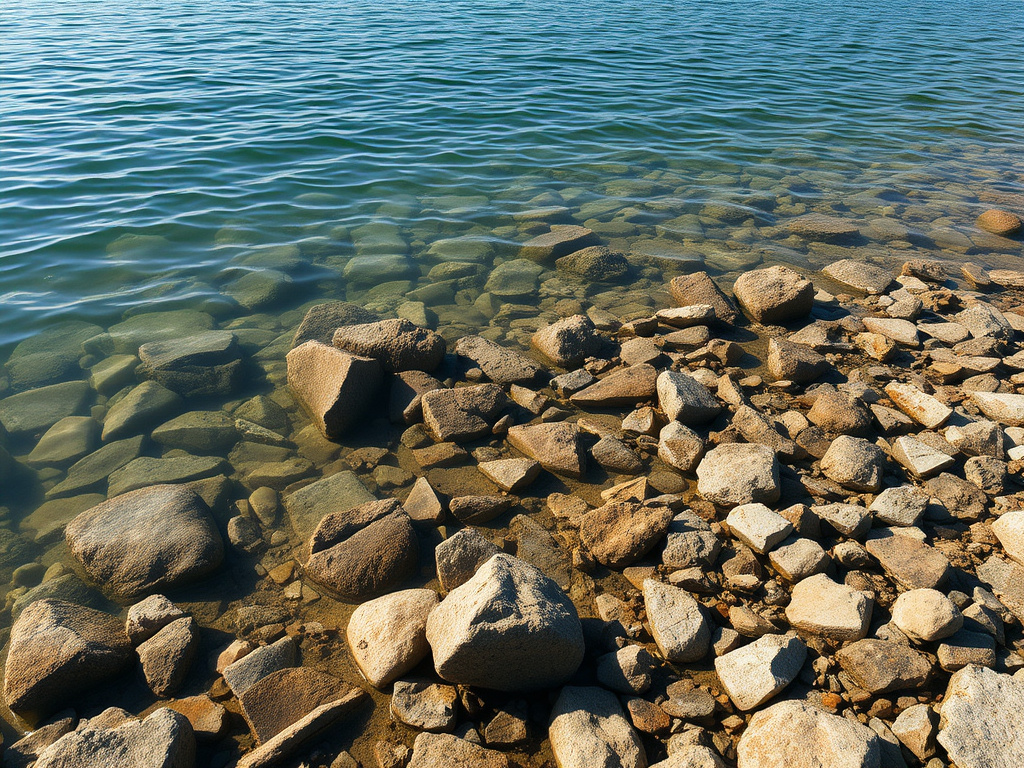
Most pontoon owners think about their insurance rate in terms of the boat — its value, its horsepower, its age. Fewer think about the lake itself as a rating factor, but where you actually boat shapes your realistic risk profile just as much as what you boat. Here are five lake-specific factors worth understanding, and mentioning to your agent, before your next renewal.
1. Submerged hazards and shoreline geography
A lake with a rocky shoreline, known shallow shelves, or submerged structure (old dock pilings, downed trees, rock bars) carries real grounding and hull/tube-puncture risk that a deep, clear, obstruction-free lake doesn't. If your home lake has known hazard areas, physical damage claims for grounding-related tube punctures are a realistic pattern worth structuring your deductible and coverage around, not an unlucky one-off.
2. Water traffic density
A small, quiet lake with a handful of regular boats sees meaningfully less collision exposure than a large, popular recreational lake packed with boat traffic, jet skis, and tubers on a summer weekend. Liability exposure scales with how much other traffic you're realistically sharing the water with, which is part of why navigational-limit structuring matters — a policy should reflect the actual water you're on, not a generic assumption.
3. Wind fetch and wave exposure on larger bodies of water
Small, sheltered lakes generally see limited wave action. Larger lakes, reservoirs, and especially the Great Lakes or connected coastal-adjacent waters can generate significant wind fetch and wave height that raise both operational risk and weather-related physical damage exposure. A pontoon — with its flat, wide deck and higher profile — is more wind- and wave-sensitive than a low-profile runabout, which is exactly why connected-water and Great Lakes use needs to be disclosed and underwritten specifically rather than assumed to be the same as calm inland-lake use.
4. Climate and realistic season length
This is where seasonal lay-up coverage connects directly back to your specific lake. A northern lake with a hard freeze and a short, well-defined boating season supports tight, high-value lay-up dates and meaningful off-season savings. A milder-climate lake with a longer realistic season has less lay-up upside simply because the boat is in the water more of the year. Either way, the accurate answer comes from your specific lake's real climate pattern, not a regional generalization.
5. Theft and security patterns at your storage or docking location
A public boat ramp or an unmonitored marina lot carries different theft exposure than a private dock, a gated storage facility, or an owner's own property. This affects both physical damage theft rating and personal property coverage, since gear left aboard at an exposed public location is a more realistic theft target than the same gear at a private, monitored location.
None of these five factors show up if you don't mention them. Tell your agent honestly about your specific lake, your storage location, and your realistic season — it's the fastest way to make sure your policy actually reflects your real risk instead of a generic assumption.
Putting it together
Your rate isn't just a function of your boat — it's a function of your boat on your specific water, stored in your specific location, for your specific season. Owners who walk through these five factors with their agent tend to end up with coverage that's both better-fitted and, in many cases, more accurately (and sometimes more favorably) priced than a generic quote that never asked the question.
Quick Answers
Related Questions
Does the specific lake I boat on actually affect my insurance rate?
+
Yes — water traffic density, submerged hazards, wind/wave exposure, and typical season length are all real rating considerations tied to your specific lake, not just your boat itself.
Should I tell my insurance agent about known hazards on my lake?
+
Yes — disclosing known shallow areas, submerged structure, or high-traffic patterns helps ensure your coverage (and deductible structure) actually reflects your real risk rather than a generic assumption.
Keep Reading
More Guides

Get pontoon coverage built around how you boat
Tell us about your boat and your lake and we'll come back with a coverage combination priced to your real usage — not a flattened generic boat quote.